

Skip to Content
· Dermal Fillers
SKU 11097

Restylane

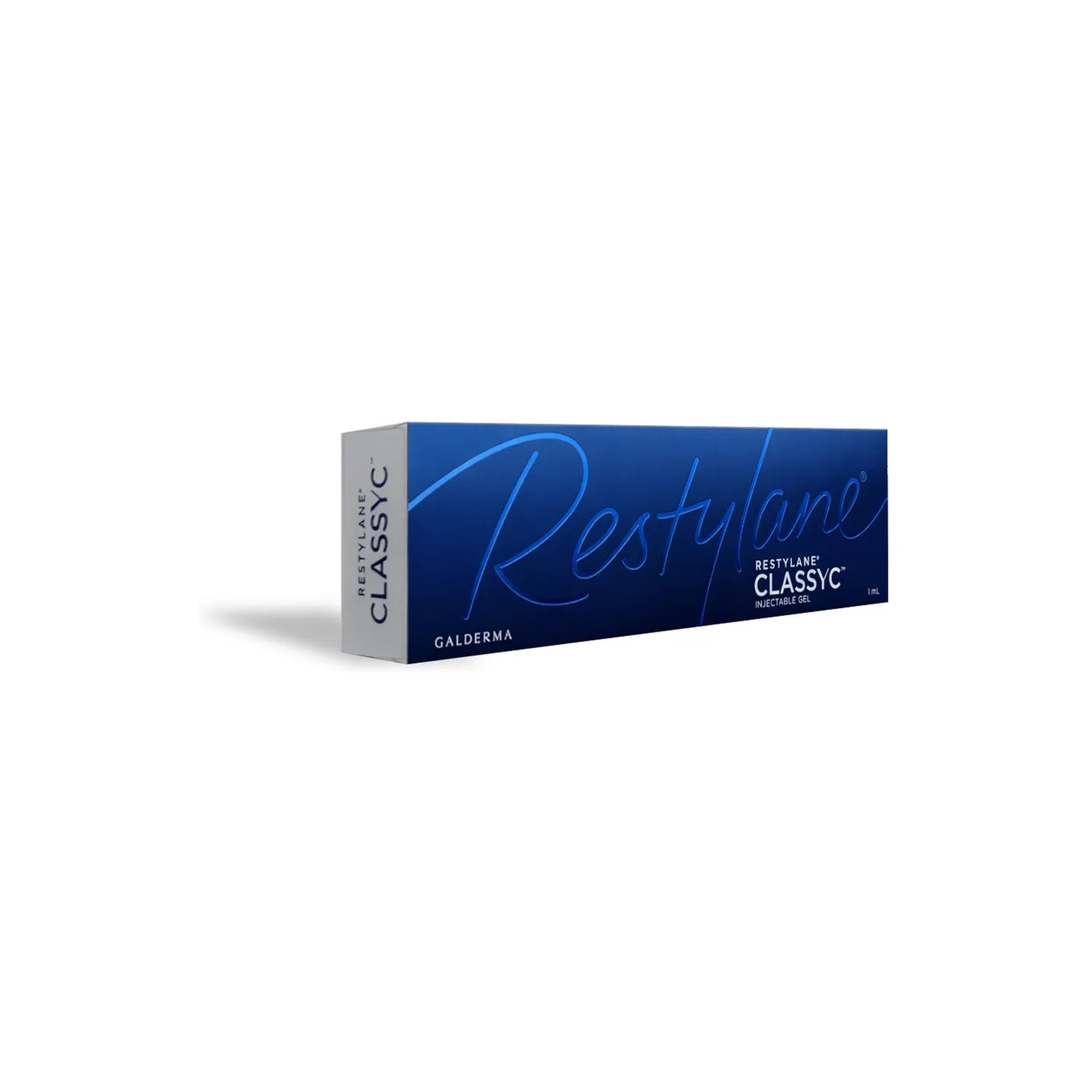
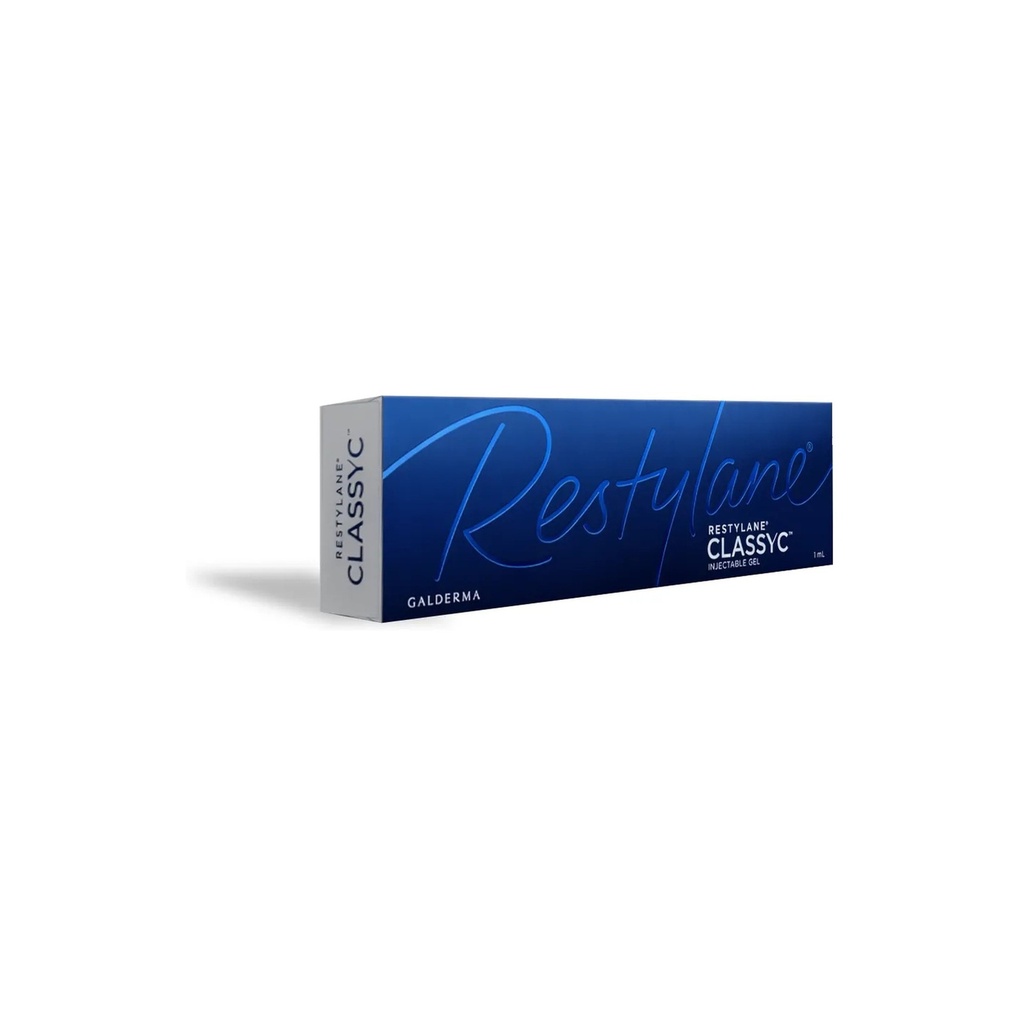
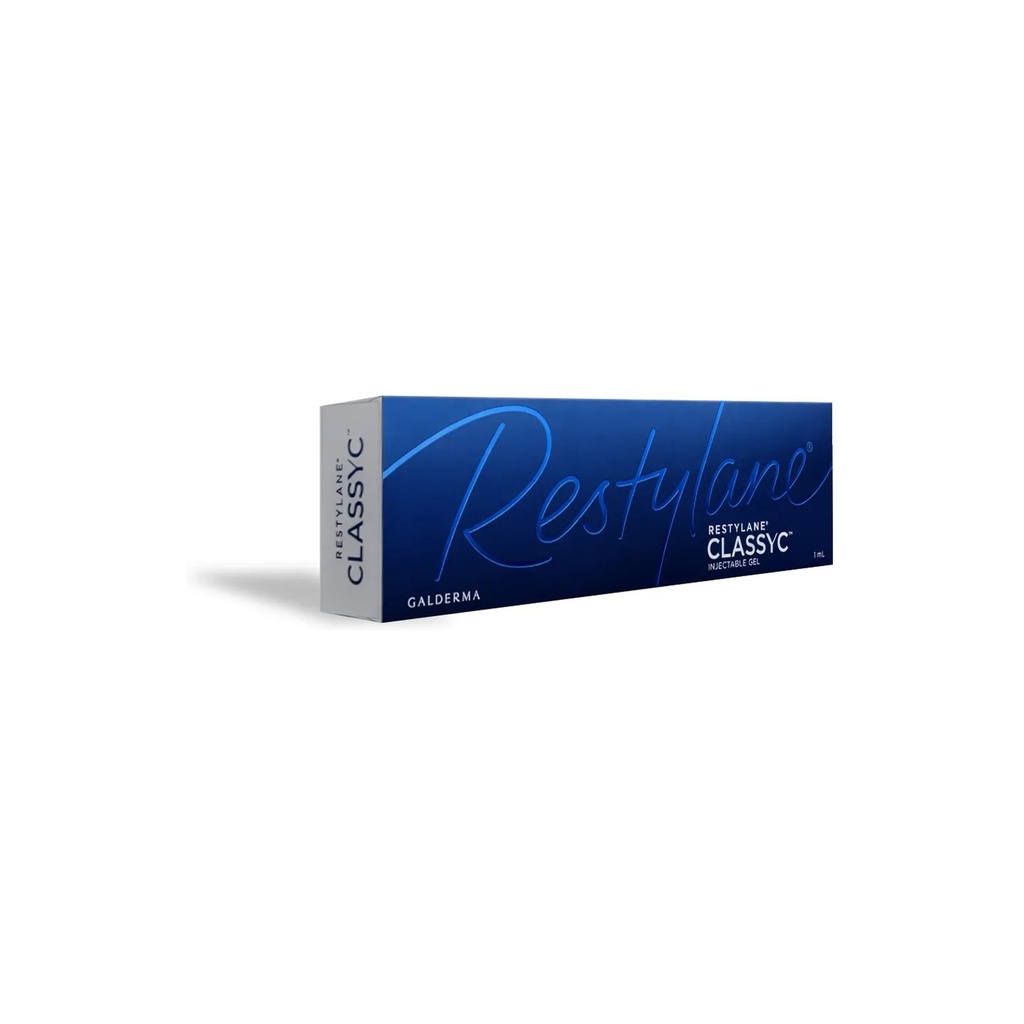
Restylane (Restylane Classyc) is a dermal filler indicated for mid-to-deep dermal implantation to correct moderate to severe facial wrinkles and folds. It is also indicated for submucosal lip augmentation in patients over the age of 21.

In stock
Volume
1x1mL
Laboratory
Galderma Laboratories, L.P.
Origin
Sweden
Indication
Moderate to severe wrinkles and folds, lip augmentation
Trade price and history are verified-only
allpara supplies licensed practitioners. Sign in or apply for a B2B account to see live pricing, volume tiers and price history.

Restylane is a NASHA hyaluronic acid dermal filler by Galderma, formulated for mid-to-deep dermal correction of moderate to severe facial wrinkles and folds. It is commonly used by clinics, dermatologists and aesthetic physicians on nasolabial folds and for lip augmentation. The gel is stabilised hyaluronic acid cross-linked with BDDE and contains no anaesthetic, which makes it the reference of choice where lidocaine is undesirable or contraindicated, and it is supplied for professional use only.

Key Benefits of Restylane

  • Contains no lidocaine, so it can be used where an anaesthetic is undesirable or contraindicated
  • NASHA technology gives a stable gel structure that supports precise placement
  • Designed to integrate into dermal tissue while preserving facial expression and movement
  • Corrects moderate to severe wrinkles and folds through volumisation and hydration
  • Covers both facial folds and lip augmentation from a single reference
  • Hyaluronic acid based, so the implant can be broken down by enzymatic degradation with hyaluronidase where clinically indicated
  • Duration of effectiveness of 18 months in the nasolabial folds following re-treatment at 4,5 or 9 months
  • Supplied with sterilised needles, either 30G x 1/2 inch or 29G x 1/2 inch
Key Information
Brand RESTYLANE
Manufacturer Galderma
Country of Origin Sweden
Certification CE marked in accordance with Regulation (EU) 2017/745. The needles supplied are CE marked 0197
Ingredients Gel of hyaluronic acid generated by Streptococcus species of bacteria, chemically cross-linked with 1,4-butanediol diglycidyl ether (BDDE), stabilised and suspended in phosphate-buffered saline at pH 7. Hyaluronic acid 20 mg/mL. Contains no lidocaine
Volume / Size 1 mL per syringe
Packaging 1 x 1 mL syringe
Needle Size 30G x 1/2 inch or 29G x 1/2 inch, co-packed as stated on the carton
Use Type For professional use. Injectable dermal filler
Injection Depth Mid-to-deep dermal for wrinkles and folds; submucosal for lip augmentation
Protocol / Duration Duration of effectiveness of 18 months from baseline in the nasolabial folds, following re-treatment at 4,5 or 9 months. Maximum recommended dose 6 ml per treatment for the nasolabial folds, and no more than 1,5 ml per lip per session

Indications and Professional Use

Main indications

  • Moderate to severe facial wrinkles and folds, such as nasolabial folds, by mid-to-deep dermal implantation
  • Lip augmentation in patients over the age of 21, by submucosal implantation

Professional use

Restylane is an injectable medical device for administration only by licensed, appropriately trained healthcare practitioners in a controlled clinical setting, and is not for retail sale or self-administration. It is indicated for mid-to-deep dermal implantation for wrinkles and folds and for submucosal implantation for lip augmentation, and is contraindicated for implantation in anatomical spaces other than these. It must not be implanted into blood vessels and should not be used in vascular rich areas, since localised superficial necrosis and scarring may occur after injection in or near vessels.

Treatment areas

  • Nasolabial folds
  • Moderate to severe facial wrinkles and folds
  • Lips, for augmentation

Patient profile

For adult patients assessed as suitable by the treating practitioner, with lip augmentation indicated in patients over the age of 21. Patient selection, treatment area, injected volume and injection plane are determined by the practitioner following clinical assessment. Because this reference contains no lidocaine, it is the appropriate choice where an amide-type local anaesthetic is contraindicated or where the practitioner prefers to control anaesthesia separately. It is contraindicated in patients with severe allergies manifested by a history of anaphylaxis, or a history or presence of multiple severe allergies, in patients with a history of allergy to gram-positive bacterial proteins, since the gel contains trace amounts of such material, and in patients with bleeding disorders. Use should be deferred at sites where an active inflammatory process such as cysts, pimples, rashes or hives, or an infection, is present until that process has been controlled.

How Restylane Works

Restylane works through non-animal stabilised hyaluronic acid produced by fermentation and cross-linked with BDDE, which binds water and restores volume when implanted in the mid to deep dermis. The NASHA structure holds its form rather than spreading, so the gel integrates into dermal tissue while allowing normal facial movement. This makes it suitable for practitioners correcting moderate to severe folds who need predictable placement and no incorporated anaesthetic.

Why Order From Allpara

Allpara offers genuine, verified RESTYLANE products from vetted suppliers, with full batch-traceability and expert support. We serve clinics and aesthetic professionals with CE-certified products, fast EU-wide delivery from our EU warehouse, and competitive trade pricing. Our focus is your patients' safety, satisfaction and results - with dedicated after-sales support for your peace of mind.

Frequently Asked Questions

How does Restylane differ from Restylane Lidocaine?

Both carry the same hyaluronic acid concentration of 20 mg/mL and both are cross-linked with BDDE. The difference is the anaesthetic: Restylane Lidocaine contains lidocaine hydrochloride 3 mg/mL, while Restylane contains none. Restylane is therefore the reference to use where lidocaine is undesirable or contraindicated, and the two are not interchangeable in that situation.

Which technology does Restylane use?

Restylane uses NASHA, non-animal stabilised hyaluronic acid generated by Streptococcus species of bacteria and cross-linked with 1,4-butanediol diglycidyl ether. The gel is suspended in phosphate-buffered saline at pH 7. The stabilised structure is what supports precise placement and integration into dermal tissue.
How do clinics order Restylane wholesale?

ALLPARA supplies Restylane to licensed practitioners, clinics and distributors on a B2B account. State whether you require the plain reference or Restylane Lidocaine, since they are separate products and the choice is clinically driven. Wholesale terms, stock position and batch expiry are released to registered professional buyers on request.

/ Specifications

The datasheet

Category
Dermal Fillers
Brand
RESTYLANE
Laboratory
Galderma Laboratories, L.P.
SKU
11097
Format
1x1mL
Origin
Sweden
Indication
Moderate to severe wrinkles and folds, lip augmentation
Use
Professional use
/ Product details

The full file

Restylane is a NASHA hyaluronic acid dermal filler by Galderma, formulated for mid-to-deep dermal correction of moderate to severe facial wrinkles and folds. It is commonly used by clinics, dermatologists and aesthetic physicians on nasolabial folds and for lip augmentation. The gel is stabilised hyaluronic acid cross-linked with BDDE and contains no anaesthetic, which makes it the reference of choice where lidocaine is undesirable or contraindicated, and it is supplied for professional use only.

Galderma Laboratories, L.P., country of origin Sweden.

Shipped EU-wide from our EU warehouse, tracked and insured, with 24-72h dispatch. Each unit ships with batch number and expiry, held in EU bond and batch-traceable.

Store to manufacturer specification, away from direct light. Cold-chain is only used where the product requires it.

Net 30 / 60 / 90 day terms* are available to verified accounts on credit approval. Invoicing is supported in EUR, CHF and GBP.

Terms are indicative and confirmed after account review.

How does Restylane differ from Restylane Lidocaine?

Both carry the same hyaluronic acid concentration of 20 mg/mL and both are cross-linked with BDDE. The difference is the anaesthetic: Restylane Lidocaine contains lidocaine hydrochloride 3 mg/mL, while Restylane contains none. Restylane is therefore the reference to use where lidocaine is undesirable or contraindicated, and the two are not interchangeable in that situation.

Which technology does Restylane use?

Restylane uses NASHA, non-animal stabilised hyaluronic acid generated by Streptococcus species of bacteria and cross-linked with 1,4-butanediol diglycidyl ether. The gel is suspended in phosphate-buffered saline at pH 7. The stabilised structure is what supports precise placement and integration into dermal tissue.
How do clinics order Restylane wholesale?

ALLPARA supplies Restylane to licensed practitioners, clinics and distributors on a B2B account. State whether you require the plain reference or Restylane Lidocaine, since they are separate products and the choice is clinically driven. Wholesale terms, stock position and batch expiry are released to registered professional buyers on request.

/ Quick answers

Everything a buyer asks first

How does Restylane differ from Restylane Lidocaine?
Both carry the same hyaluronic acid concentration of 20 mg/mL and both are cross-linked with BDDE. The difference is the anaesthetic: Restylane Lidocaine contains lidocaine hydrochloride 3 mg/mL, while Restylane contains none. Restylane is therefore the reference to use where lidocaine is undesirable or contraindicated, and the two are not interchangeable in that situation.
Which technology does Restylane use?
Restylane uses NASHA, non-animal stabilised hyaluronic acid generated by Streptococcus species of bacteria and cross-linked with 1,4-butanediol diglycidyl ether. The gel is suspended in phosphate-buffered saline at pH 7. The stabilised structure is what supports precise placement and integration into dermal tissue.
How do clinics order Restylane wholesale?
ALLPARA supplies Restylane to licensed practitioners, clinics and distributors on a B2B account. State whether you require the plain reference or Restylane Lidocaine, since they are separate products and the choice is clinically driven. Wholesale terms, stock position and batch expiry are released to registered professional buyers on request.
/ FAQ

Frequently asked

Both carry the same hyaluronic acid concentration of 20 mg/mL and both are cross-linked with BDDE. The difference is the anaesthetic: Restylane Lidocaine contains lidocaine hydrochloride 3 mg/mL, while Restylane contains none. Restylane is therefore the reference to use where lidocaine is undesirable or contraindicated, and the two are not interchangeable in that situation.
Restylane uses NASHA, non-animal stabilised hyaluronic acid generated by Streptococcus species of bacteria and cross-linked with 1,4-butanediol diglycidyl ether. The gel is suspended in phosphate-buffered saline at pH 7. The stabilised structure is what supports precise placement and integration into dermal tissue.
ALLPARA supplies Restylane to licensed practitioners, clinics and distributors on a B2B account. State whether you require the plain reference or Restylane Lidocaine, since they are separate products and the choice is clinically driven. Wholesale terms, stock position and batch expiry are released to registered professional buyers on request.

More from Galderma

View laboratory

Clinic alternatives

All products

Restylane

In stock
Verified-only pricing
Sign in or apply for a B2B account to see your price.
Apply for B2B

Restylane is a NASHA hyaluronic acid dermal filler by Galderma, formulated for mid-to-deep dermal correction of moderate to severe facial wrinkles and folds. It is commonly used by clinics, dermatologists and aesthetic physicians on nasolabial folds and for lip augmentation. The gel is stabilised hyaluronic acid cross-linked with BDDE and contains no anaesthetic, which makes it the reference of choice where lidocaine is undesirable or contraindicated, and it is supplied for professional use only.

Key Benefits of Restylane

  • Contains no lidocaine, so it can be used where an anaesthetic is undesirable or contraindicated
  • NASHA technology gives a stable gel structure that supports precise placement
  • Designed to integrate into dermal tissue while preserving facial expression and movement
  • Corrects moderate to severe wrinkles and folds through volumisation and hydration
  • Covers both facial folds and lip augmentation from a single reference
  • Hyaluronic acid based, so the implant can be broken down by enzymatic degradation with hyaluronidase where clinically indicated
  • Duration of effectiveness of 18 months in the nasolabial folds following re-treatment at 4,5 or 9 months
  • Supplied with sterilised needles, either 30G x 1/2 inch or 29G x 1/2 inch
Key Information
Brand RESTYLANE
Manufacturer Galderma
Country of Origin Sweden
Certification CE marked in accordance with Regulation (EU) 2017/745. The needles supplied are CE marked 0197
Ingredients Gel of hyaluronic acid generated by Streptococcus species of bacteria, chemically cross-linked with 1,4-butanediol diglycidyl ether (BDDE), stabilised and suspended in phosphate-buffered saline at pH 7. Hyaluronic acid 20 mg/mL. Contains no lidocaine
Volume / Size 1 mL per syringe
Packaging 1 x 1 mL syringe
Needle Size 30G x 1/2 inch or 29G x 1/2 inch, co-packed as stated on the carton
Use Type For professional use. Injectable dermal filler
Injection Depth Mid-to-deep dermal for wrinkles and folds; submucosal for lip augmentation
Protocol / Duration Duration of effectiveness of 18 months from baseline in the nasolabial folds, following re-treatment at 4,5 or 9 months. Maximum recommended dose 6 ml per treatment for the nasolabial folds, and no more than 1,5 ml per lip per session

Indications and Professional Use

Main indications

  • Moderate to severe facial wrinkles and folds, such as nasolabial folds, by mid-to-deep dermal implantation
  • Lip augmentation in patients over the age of 21, by submucosal implantation

Professional use

Restylane is an injectable medical device for administration only by licensed, appropriately trained healthcare practitioners in a controlled clinical setting, and is not for retail sale or self-administration. It is indicated for mid-to-deep dermal implantation for wrinkles and folds and for submucosal implantation for lip augmentation, and is contraindicated for implantation in anatomical spaces other than these. It must not be implanted into blood vessels and should not be used in vascular rich areas, since localised superficial necrosis and scarring may occur after injection in or near vessels.

Treatment areas

  • Nasolabial folds
  • Moderate to severe facial wrinkles and folds
  • Lips, for augmentation

Patient profile

For adult patients assessed as suitable by the treating practitioner, with lip augmentation indicated in patients over the age of 21. Patient selection, treatment area, injected volume and injection plane are determined by the practitioner following clinical assessment. Because this reference contains no lidocaine, it is the appropriate choice where an amide-type local anaesthetic is contraindicated or where the practitioner prefers to control anaesthesia separately. It is contraindicated in patients with severe allergies manifested by a history of anaphylaxis, or a history or presence of multiple severe allergies, in patients with a history of allergy to gram-positive bacterial proteins, since the gel contains trace amounts of such material, and in patients with bleeding disorders. Use should be deferred at sites where an active inflammatory process such as cysts, pimples, rashes or hives, or an infection, is present until that process has been controlled.

How Restylane Works

Restylane works through non-animal stabilised hyaluronic acid produced by fermentation and cross-linked with BDDE, which binds water and restores volume when implanted in the mid to deep dermis. The NASHA structure holds its form rather than spreading, so the gel integrates into dermal tissue while allowing normal facial movement. This makes it suitable for practitioners correcting moderate to severe folds who need predictable placement and no incorporated anaesthetic.

Why Order From Allpara

Allpara offers genuine, verified RESTYLANE products with full batch-traceability, CE-certified stock, fast EU-wide delivery and expert after-sales support.

Frequently Asked Questions

How does Restylane differ from Restylane Lidocaine?

Both carry the same hyaluronic acid concentration of 20 mg/mL and both are cross-linked with BDDE. The difference is the anaesthetic: Restylane Lidocaine contains lidocaine hydrochloride 3 mg/mL, while Restylane contains none. Restylane is therefore the reference to use where lidocaine is undesirable or contraindicated, and the two are not interchangeable in that situation.

Which technology does Restylane use?

Restylane uses NASHA, non-animal stabilised hyaluronic acid generated by Streptococcus species of bacteria and cross-linked with 1,4-butanediol diglycidyl ether. The gel is suspended in phosphate-buffered saline at pH 7. The stabilised structure is what supports precise placement and integration into dermal tissue.

How do clinics order Restylane wholesale?

ALLPARA supplies Restylane to licensed practitioners, clinics and distributors on a B2B account. State whether you require the plain reference or Restylane Lidocaine, since they are separate products and the choice is clinically driven. Wholesale terms, stock position and batch expiry are released to registered professional buyers on request.

More from Galderma

View laboratory →

Restylane is a NASHA hyaluronic acid dermal filler by Galderma, formulated for mid-to-deep dermal correction of moderate to severe facial wrinkles and folds. It is commonly used by clinics, dermatologists and aesthetic physicians on nasolabial folds and for lip augmentation. The gel is stabilised hyaluronic acid cross-linked with BDDE and contains no anaesthetic, which makes it the reference of choice where lidocaine is undesirable or contraindicated, and it is supplied for professional use only.

Galderma Laboratories, L.P., country of origin Sweden.

Shipped EU-wide from our EU warehouse, 24-72h dispatch, tracked and insured. Each unit ships with batch number and expiry, held in EU bond and batch-traceable. Store to manufacturer specification.

Net 30 / 60 / 90 day terms* for verified accounts on credit approval. Invoicing in EUR, CHF and GBP.

How does Restylane differ from Restylane Lidocaine?

Both carry the same hyaluronic acid concentration of 20 mg/mL and both are cross-linked with BDDE. The difference is the anaesthetic: Restylane Lidocaine contains lidocaine hydrochloride 3 mg/mL, while Restylane contains none. Restylane is therefore the reference to use where lidocaine is undesirable or contraindicated, and the two are not interchangeable in that situation.

Which technology does Restylane use?

Restylane uses NASHA, non-animal stabilised hyaluronic acid generated by Streptococcus species of bacteria and cross-linked with 1,4-butanediol diglycidyl ether. The gel is suspended in phosphate-buffered saline at pH 7. The stabilised structure is what supports precise placement and integration into dermal tissue.

How do clinics order Restylane wholesale?

ALLPARA supplies Restylane to licensed practitioners, clinics and distributors on a B2B account. State whether you require the plain reference or Restylane Lidocaine, since they are separate products and the choice is clinically driven. Wholesale terms, stock position and batch expiry are released to registered professional buyers on request.

* Professional-use product. Packaging may vary by batch or market. Refer to the supplied IFU for full directions and contraindications.