
 Rellenos dérmicos

TEOSYAL referencias disponibles en ALLPARA para uso profesional, de origen directo y certificadas en cada envío.

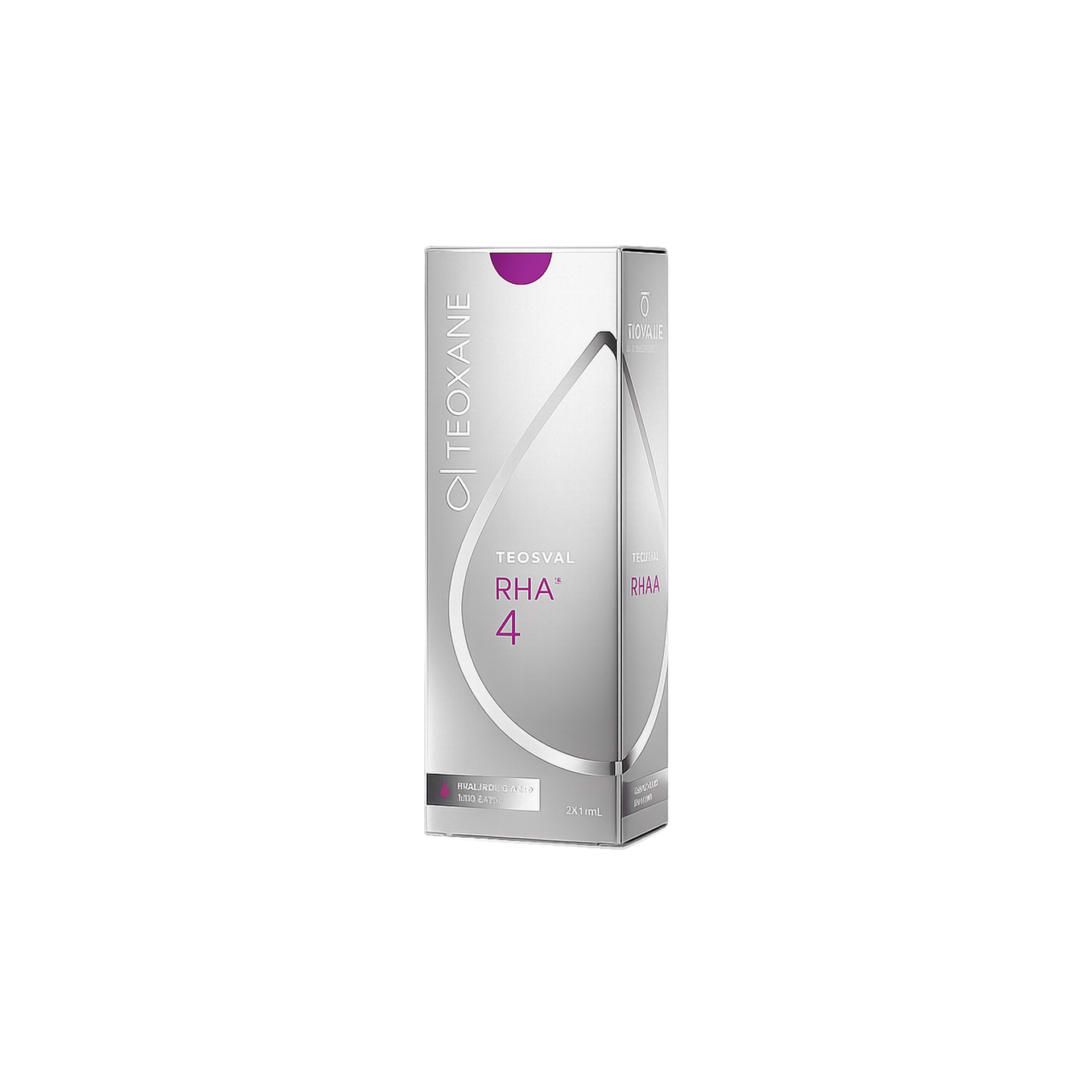
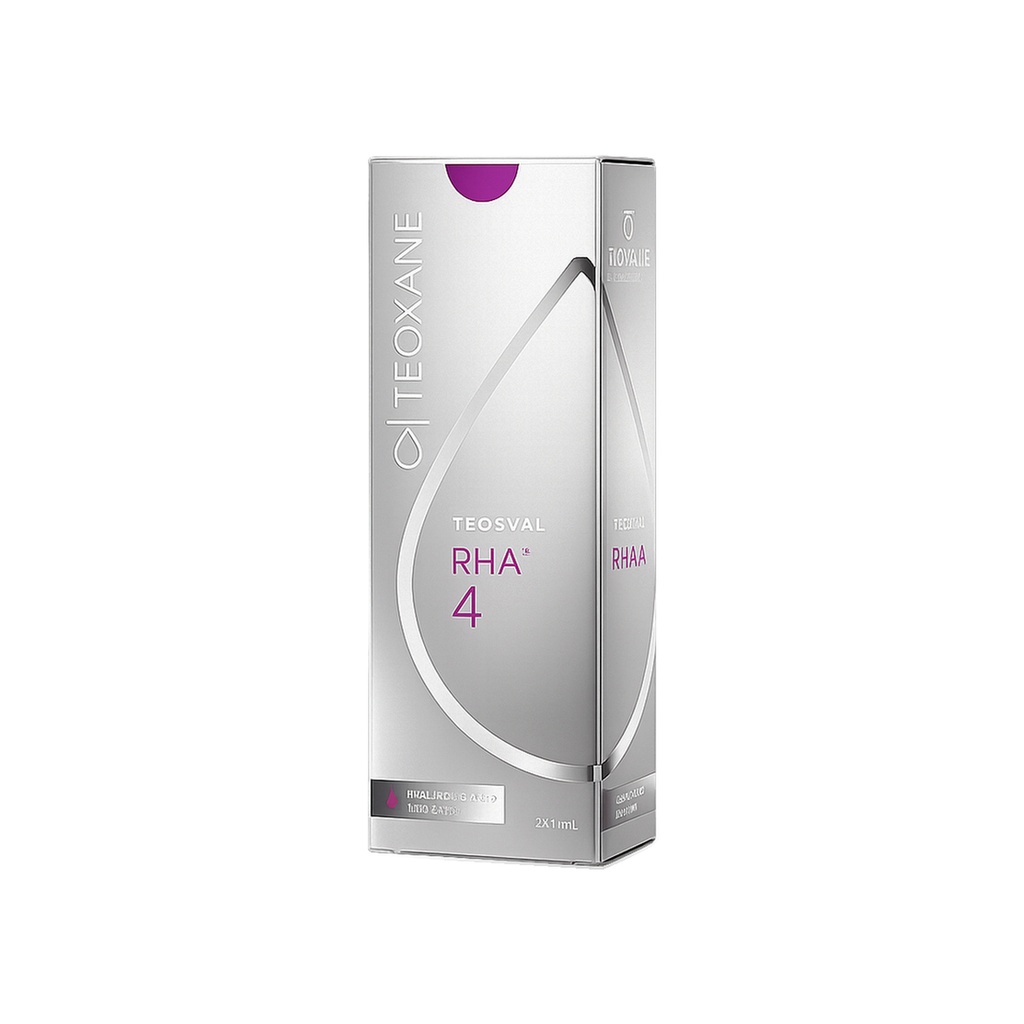
TEOSYAL RHA 4 is a transparent, sterile, non-pyrogenic and viscoelastic hyaluronic acid filler of non-animal origin from Teoxane SA in Geneva, created as the structural grade of the RHA line. It is indicated to remodel facial contours and to treat deep wrinkles and folds where the skin is thick. With a mean molecular weight above 1 million Dalton, its 23 mg/mL of hyaluronic acid is cross-linked with BDDE and combined with 0.3% by mass of lidocaine hydrochloride. Two 1.2 mL pre-filled syringes come in every box, each with two sterile 27G 1/2 inch needles and two traceability labels.
TEOSYAL RHA 4 is only to be administered by appropriately trained healthcare professionals who are qualified or accredited in accordance with national law, and is not for retail sale or self-administration. It is injected slowly at variable depths depending on the area treated: into the dermis, subcutaneously, or onto the supraperiosteum. As an alternative to the needle, a 25G blunt cannula can be used (compatibility with the TSK 25G/50 mm cannula has been verified); when a cannula is used, an entry point is made in the skin with a sharp needle of appropriate size. Deep contour work of this kind demands advanced anatomical knowledge. It must not be injected into the epidermis, into or close to a blood vessel, close to a nerve, or at depths other than those described. It must not be injected into the periorbital area (eyelid, tear trough, crow's feet), the glabellar region or the lips.
For adults assessed as suitable by the treating practitioner, typically those needing structural contour work or correction in thick skin areas rather than surface lines. It must not be used in patients with cutaneous disorders, inflammation or infection at or near the treatment site, since injection procedures can lead to reactivation of latent or subclinical herpes viral infection. Because of the lidocaine content it must not be used in patients with known hypersensitivity to lidocaine or to amide local anaesthetics, or in patients with hepatocellular insufficiency or undergoing related treatment.
TEOSYAL RHA 4 works through hyaluronic acid at 23 mg/mL with a degree of cross-linking below 5%, placed deep enough to remodel facial contour and correct minor tissue ptosis. It is the grade of the line intended for thick skin areas, where a lighter gel would not hold the correction. The low cross-linking is deliberate even at this structural role: the gel restores volume while adapting to tissue that moves, rather than sitting as a rigid mass. The lidocaine hydrochloride at 0.3% reduces the sensation of pain during injection.
Allpara ofrece productos TEOSYAL originales y verificados de proveedores seleccionados, con trazabilidad completa de lotes y asesoramiento experto. Atendemos a clínicas y profesionales de la estética con productos con certificado CE, entrega rápida en toda la UE desde nuestro almacén en la UE y precios profesionales competitivos. Nuestra prioridad es la seguridad, la satisfacción y los resultados de sus pacientes, con un servicio posventa dedicado para su tranquilidad.
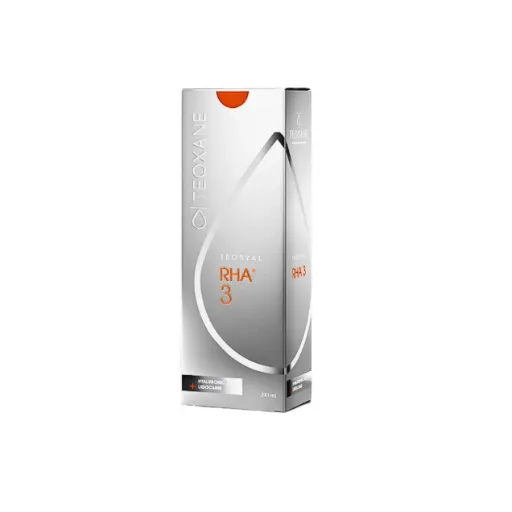
Both carry 23 mg/mL hyaluronic acid with cross-linking below 5% and are supplied with 27G needles; RHA 3 comes in 1 ml syringes and RHA 4 in 1.2 ml syringes. RHA 3 is for deep wrinkles and creases, midface volume, lower face remodelling and the perioral region including the lips. RHA 4 is the structural grade, for facial contour remodelling and deep wrinkles in thick skin areas, and additionally covers the temples and minor tissue ptosis. RHA 4 also lasts longer, 15 to 18 months against 12 to 18.
The estimated in vivo lifetime is 15 to 18 months, the longest in the RHA line. Duration depends on skin type, the severity of the wrinkle treated, the injection area, the volume injected, and the patient's physiology and lifestyle.
TEOSYAL referencias disponibles en ALLPARA para uso profesional, de origen directo y certificadas en cada envío.

TEOXANE referencias disponibles en ALLPARA para uso profesional, de origen directo y certificadas en cada envío.
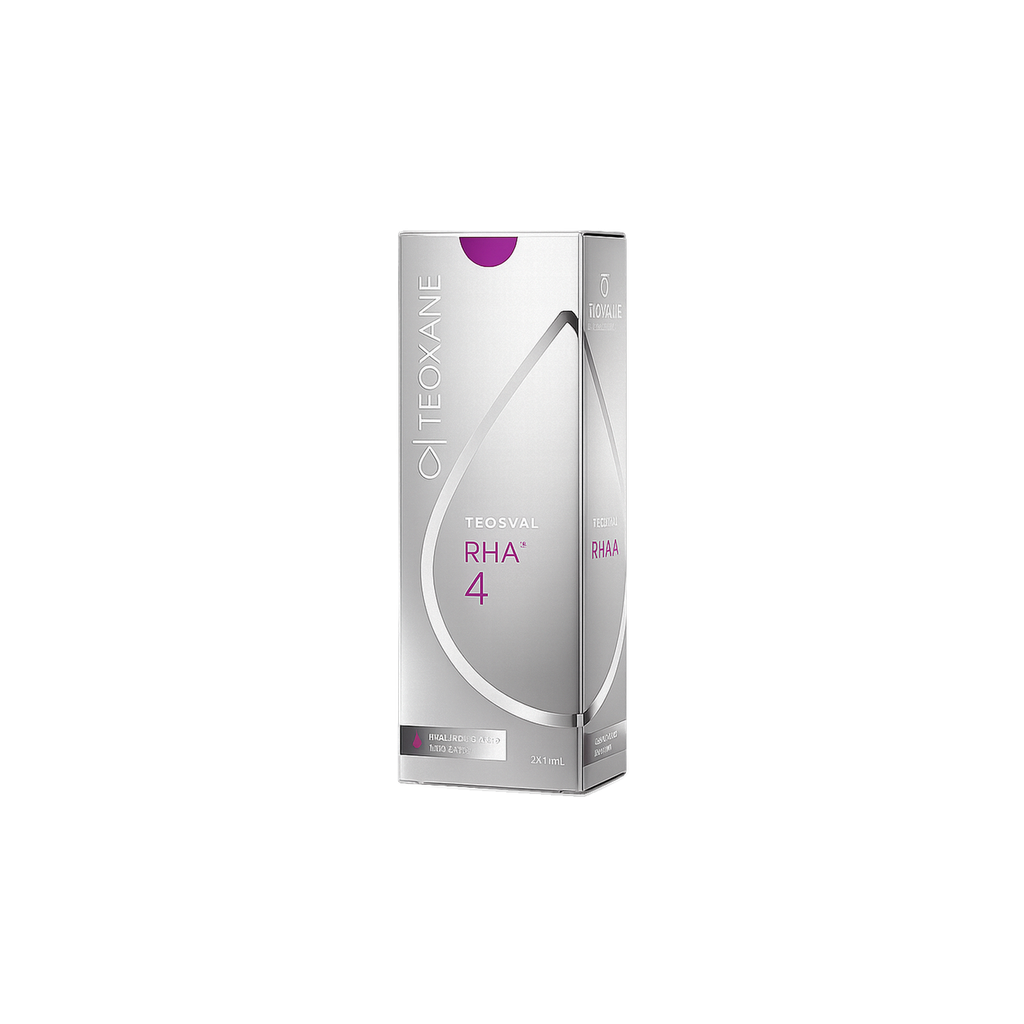
TEOSYAL RHA 4 is a transparent, sterile, non-pyrogenic and viscoelastic hyaluronic acid filler of non-animal origin from Teoxane SA in Geneva, created as the structural grade of the RHA line. It is indicated to remodel facial contours and to treat deep wrinkles and folds where the skin is thick. With a mean molecular weight above 1 million Dalton, its 23 mg/mL of hyaluronic acid is cross-linked with BDDE and combined with 0.3% by mass of lidocaine hydrochloride. Two 1.2 mL pre-filled syringes come in every box, each with two sterile 27G 1/2 inch needles and two traceability labels.
TEOSYAL RHA 4 is only to be administered by appropriately trained healthcare professionals who are qualified or accredited in accordance with national law, and is not for retail sale or self-administration. It is injected slowly at variable depths depending on the area treated: into the dermis, subcutaneously, or onto the supraperiosteum. As an alternative to the needle, a 25G blunt cannula can be used (compatibility with the TSK 25G/50 mm cannula has been verified); when a cannula is used, an entry point is made in the skin with a sharp needle of appropriate size. Deep contour work of this kind demands advanced anatomical knowledge. It must not be injected into the epidermis, into or close to a blood vessel, close to a nerve, or at depths other than those described. It must not be injected into the periorbital area (eyelid, tear trough, crow's feet), the glabellar region or the lips.
For adults assessed as suitable by the treating practitioner, typically those needing structural contour work or correction in thick skin areas rather than surface lines. It must not be used in patients with cutaneous disorders, inflammation or infection at or near the treatment site, since injection procedures can lead to reactivation of latent or subclinical herpes viral infection. Because of the lidocaine content it must not be used in patients with known hypersensitivity to lidocaine or to amide local anaesthetics, or in patients with hepatocellular insufficiency or undergoing related treatment.
TEOSYAL RHA 4 works through hyaluronic acid at 23 mg/mL with a degree of cross-linking below 5%, placed deep enough to remodel facial contour and correct minor tissue ptosis. It is the grade of the line intended for thick skin areas, where a lighter gel would not hold the correction. The low cross-linking is deliberate even at this structural role: the gel restores volume while adapting to tissue that moves, rather than sitting as a rigid mass. The lidocaine hydrochloride at 0.3% reduces the sensation of pain during injection.
Allpara ofrece productos TEOSYAL originales y verificados, con trazabilidad completa de lotes, stock con certificado CE, entrega rápida en toda la UE y servicio posventa experto.
Both carry 23 mg/mL hyaluronic acid with cross-linking below 5% and are supplied with 27G needles; RHA 3 comes in 1 ml syringes and RHA 4 in 1.2 ml syringes. RHA 3 is for deep wrinkles and creases, midface volume, lower face remodelling and the perioral region including the lips. RHA 4 is the structural grade, for facial contour remodelling and deep wrinkles in thick skin areas, and additionally covers the temples and minor tissue ptosis. RHA 4 also lasts longer, 15 to 18 months against 12 to 18.
The estimated in vivo lifetime is 15 to 18 months, the longest in the RHA line. Duration depends on skin type, the severity of the wrinkle treated, the injection area, the volume injected, and the patient's physiology and lifestyle.
![Teoxane [3D] Lip](/web/image/product.template/13487/image_512)
 Cuidado estético de la piel